
Inside the Fire That Follows: A Retired Fire Captain’s Journey Through Trauma and Recovery
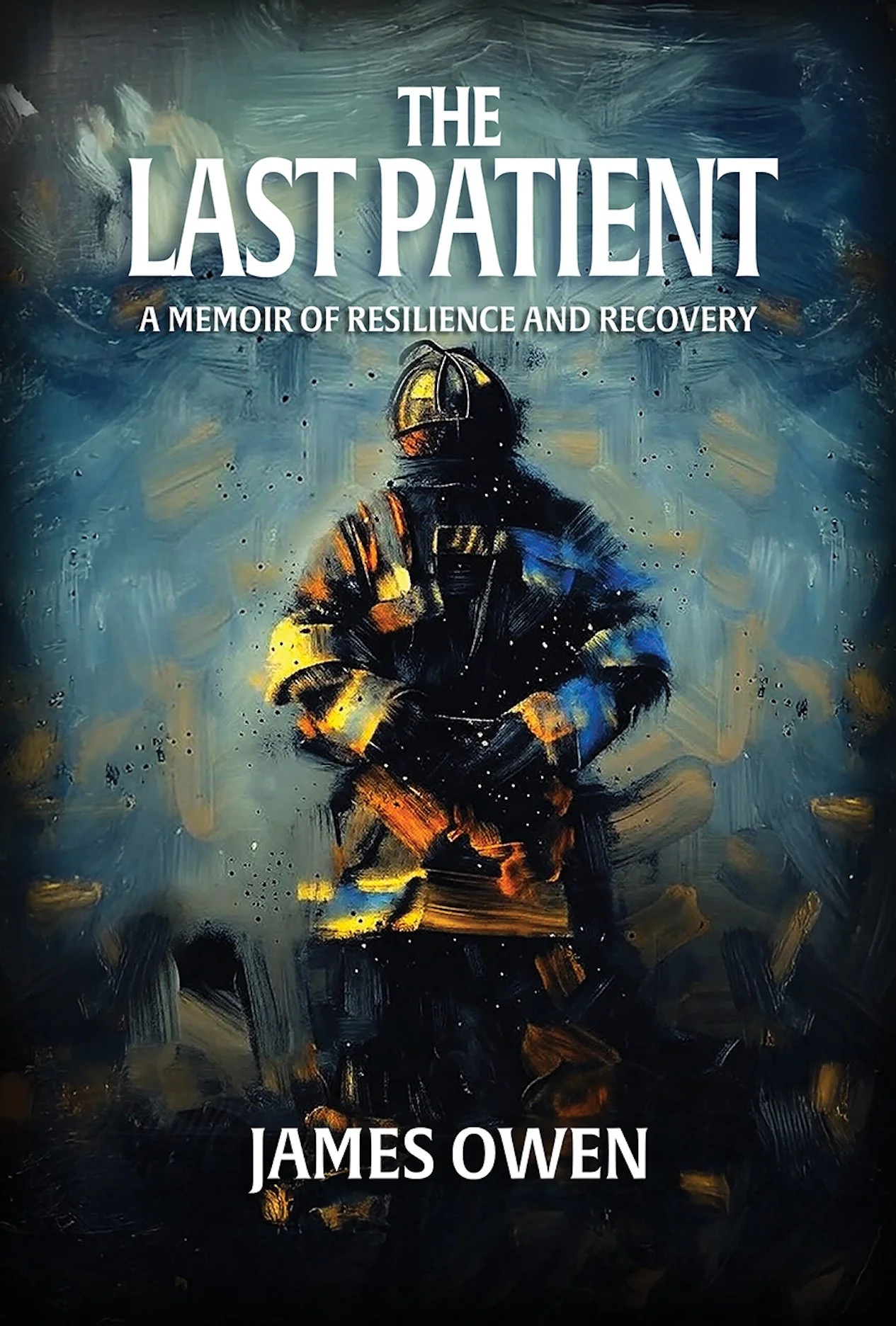
In “The Last Patient,” Captain James Owen Confronts Addiction and Institutional Failure While Offering a Practical Path to Resilience
He ran into burning buildings, but no one prepared him for what came after. Now based in Newport Beach, where he continues to serve the community through advocacy, mentorship and trauma recovery work, retired fire captain James Owen shares his story to help others facing the invisible aftermath of service. A third-generation Newport Beach resident, Owen’s roots in the community run deep—his family owned Ted Owen’s restaurants on Balboa Island in the 1930s; he attended Newport Harbor High School; and today, his son is graduating from there with high honors.
“Newport Beach has always represented something specific to me—small-town values inside an affluent environment,” Owen said. “That foundation shaped how I view service, leadership and responsibility. I believe that context matters as the book and the work expand within the community.”
In his new memoir, "The Last Patient," Owen delivers a candid and unflinching account of life inside the fire service, shedding light on the lasting psychological toll of the job, as well as the institutional gaps that often leave first responders to navigate that aftermath alone. It is a raw and compelling memoir of trauma, recovery and the cost of survival.
Drawing from a long career in high-pressure environments, Owen shares a deeply personal story of trauma, addiction and recovery, while challenging long-held assumptions about mental health in first responder culture. A recipient of the Meritorious Bravery Award and recognized by the Los Angeles District Attorney for mentoring at-risk youth, Owen now lives in Newport Beach and continues to give back by speaking nationally on resilience, leadership and the need for systemic change within high-loyalty professions.
“We run into burning buildings, but no one trains us to enter the burning buildings in our minds, or how to face the fire that follows us home. A first responder’s life is like living on high-interest credit—you can make the minimum payments, but eventually the full balance comes due. Situation screwed. Still survivable,” said James Owen, founder of Camp Pivot, a nonprofit designed to restore purpose, rebuild confidence and reignite the human spirit.
Recent data underscores the urgency of the issue. According to the Firefighter Behavioral Health Alliance and National Fire Protection Association, in 2022, 118 firefighters died by suicide compared to 96 line-of-duty deaths. Among law enforcement, organizations such as Blue H.E.L.P. have documented officer suicide totals in several recent years that exceed line-of-duty fatalities nationwide.
The pattern is measurable—not anecdotal. While first responders are rigorously trained to continuously face crises, far less emphasis is placed on how to process the cumulative stress that follows. In environments where composure is rewarded and silence is often mistaken for strength, the weight of repeated trauma can build over time without clear pathways for recovery. Over time, that burden can surface in ways that impact not just the individual, but their families and long-term well-being.
In "The Last Patient," Owen reframes the conversation around trauma, recovery and accountability, exploring the following:
The impact of a crisis does not end when it’s over—it often grows after the event: What people carry after difficult experiences can shape their mental health, relationships and long-term well-being.
When someone experiences trauma, it also affects the people around them: Stress, trauma and emotional strain often extend beyond the individual, showing up in families, partnerships, and daily life.
Recovery is possible, but it requires action: Moving forward isn’t passive. It takes awareness, accountability, and a willingness to rebuild, step by step.
Today, Owen is the founder of Camp Pivot, a program focused on trauma recovery and resilience for first responders and others navigating high-stress environments. From his base in Newport Beach, he remains actively engaged in serving the community—working to expand access to mental health resources and supporting individuals as they rebuild purpose and resilience after trauma. Through his work, he continues to advocate for stronger leadership, better systems of support, and a culture that prioritizes long-term mental health.
“The Last Patient” is now available on Amazon, Barnes & Noble, Goodreads and Walmart.
To learn more, visit www.captainjamesowen.com